Out The Window

IMG_9759

I’m working on writing my now second masters thesis, and I can tell you that in this process and many others, lots of things go out the window. The first is my APA (American Psychological Association) publication manual. Literally. Anyone who has written a document of any length can attest to the frustration, tears, and sometimes screams that accompany the creative process. Sometimes, in frustration, I throw my publication manual.

If it happens to be a nice day, and the windows are open, it flies out the window.

What is not okay to throw out the window are our positive coping skills and ways in which we engage in self-care. Yet of course, those are always the first things to go when things get busy. Schedules change from summer to fall and all of a sudden after work; we are rushing to this club or that game or some event. We no longer have time to engage in the yoga, reading, whatever it is that we do to replenish and rejuvenate our soul.

It’s very easy to do when things are rough financially as well. You are so worried about paying the light bill, the rent, and all the other necessities that there is no money left over to do anything fun. That may be true; it is reality for a lot of people. Yet, when we are at our most busy and overwhelmed times are when we need self-care and fun things the most.

You cannot keep pouring juice out of an empty pitcher. Unless you are a magician of some sort, once it’s gone, it’s gone. Yet repeatedly we overextend ourselves and run on empty.

How is that going for you?

It’s time to stop. The time you are most busy is the worst time to throw self-care out the window. If you have been going at a pace that makes a marathon look like a sprint, then it is time to slow down and embrace those things that nourish your psyche.

Sometimes we are forced to slow down. Major life events, usually an emergency, illness, or injury can force us to slow down whether we like it or not. It is usually karma’s way of saying, “hello, don’t throw self-care out the window.”

What have you done to be kind to yourself today?

Can you take even 5 minutes to turn off the phone and electronic gadgets, shut the door, and just close your eyes? Can you escape the whirlwind that is your racing mind?

I have been receiving massage to help the healing of the hip muscle I tore in my most recent marathon. I have not received massage in quite a while – not since I had employment at which I was making double what I make now. I am not sure if it is busyness or just thinking that massage is a luxury I cannot afford, but the thought to schedule a massage has not crossed my mind.

While massage is indeed helpful with my hip injury, it is perhaps even more helpful for my mind and stress levels. As I was lying there allowing someone to work on my injured hip, I remembered how important it is to take care of oneself. Massage is a luxury that I cannot afford, and probably would not be getting if not for my injury. Yet, it reminds me that every once in awhile we need to do something beneficial for ourselves even if it seems to be a little extravagant. Those are the types of things that keep your pitcher full. Those moments when you take time out to replenish yourself so that you can continue to give to others are just as important as what you do for others.

What goes out the window when you are really busy? Can you identify one activity or thing that you can do to replenish yourself at times when you need it the most?

Beauty in the Breakdown

14

In 14 races, I ran my worst marathon this past week. It was wicked hard, but it was also an amazing learning experience. They say you can’t enjoy the good runs unless you know what it is like to have a bad run. Well, now I can appreciate the good runs more.

In this race, I learned what I like and don’t like in a race. I learned how to push myself way beyond my comfort zone. I learned to rely on my training. If I had not been adequately trained and prepared for the challenges I faced, then the outcome would have been a lot worse that what occurred.

As far as the race itself, this is what it taught me: I do not like small races. With only 3,000 runners, this was my smallest marathon ever. I usually do the large city races with 30,000-40,000 runners. In such a small race as the one I just did, there is not a lot of crowd support, and medical care is so stretched out that it’s scary. I am used to the big cities where thousands of people line the streets screaming each and every mile unless I’m running on a bridge. I am used to having a medical professional within eyesight for the entire 26.2 miles. The positives in running a small race and learning this, is that I was able to prove to myself that I can make it without those amenities. I was able to push through and finish the race without an iPod, without cheering crowds lining the streets, and without the constant presence of medical support. I can run a marathon without those amenities. Do I want to run a marathon without those amenities? No, I don’t.

I sustained an injury to the TFL (tensor fasciae latae) muscle in my hip somewhere between miles 18-22. If I had been on a course in a much larger city, medical professionals would have noticed the injury sooner and pulled me off the course. I would have been a DNF (did not finish). Instead, I pushed on to make the finish line. First, I did not understand exactly what was wrong or was happening, and second, I am one of those stubborn runners who push on just to get the medal.

I am fortunate in that I was adequately trained to be able to handle this injury in such a way that it will eventually heal and I am expected to make a full recovery. However, sustaining the injury has led me to a second reason why this was my worst race ever.

The course description was not accurate. Most course descriptions are not accurate. I have run marathons described as flat that were in fact gently rolling hills. I have run marathons described as gently rolling hills that were in fact downhill. While most race descriptions are not entirely accurate, they are usually pretty close to truth. This particular course was described as downhill, so I trained for a downhill race. What it was, in fact, was a hilly race. They were not gently rolling hills. They were not rolling hills. These were hills. There was a huge discrepancy in the description and elevation maps compared to reality. Sure, there were many course changes prior to the event, that required re-certification and new measurement, but there was a gross discrepancy in what was described and how I spent 5 months training.

After my injury, the medical personnel confirmed that the injury would have been much worse if I did not have the muscle tone that I have. I trained for a downhill course, and that was what I was prepared to run. A course that was extremely hilly put more pressure on my body that it could handle; I was not prepared for hills. HILLS. They were not rolling, nor were they gentle. I have run hill races before. I have done fine on hills courses, when that is what I have trained to run.

This race also taught me that the 2015 training season was my best training season ever. I was very well prepared to run a marathon. At my 18 mile split, prior to injury, I was on track to set a PR and within minutes of a potential BQ. At the end, it all fell apart due to injury and ended up being my slowest marathon time by over an hour. The important part was that I was able to finish and was not a DNF.

I have learned to do better research when looking into races to run. I usually try to choose established races so that kinks like this have already been worked out. This marathon was the 20th anniversary – I figure 5+ years to be my barometer for “established.” However, due to the drastic course changes that occurred in the weeks right before the race, the course I experienced was way different than the one for which I trained.

I will definitely be making changes and improvements to my training for 2016 to be able to strengthen the muscle currently injured. Right now, I am thankful that the surrounding muscles are strong enough to be able to support the one that literally took one for the team.

I am so thankful for every single day that I get to run. I can’t wait to heal and to come off the injury list to be able to run again. This race and this injury have taught me that I am so blessed to have been able to participate in 14 races so far. While I am looking forward to many more, I need to be able to continue to run smart.

I can’t believe that it took me 14 races to learn that I do not like small town venues. You grow through pain. You also learn so much about yourself once you go beyond your comfort zone. While this was my most challenging race in 14, I feel like I have learned so much about myself that is only going to improve my race decisions, training, and preparation for the future.

There is beauty in the breakdown. Without this experience, I would not have learned what I was capable of doing, or how adequate my training is, or what I don’t like. Sometimes knowing what you don’t like in life is as valuable as knowing what you do like.

I have been very fortunate in my running career thus far in that my good runs and races have way outnumbered my bad runs and races. This is pretty much only the second time in 14 races that I am saying, “I will never run that one again.” For the record, the other race I have said that about is due to logistics of the host city surrounding the race, not the course or race itself. This is the first time in which I loved the host city, but loathe the race.

I have learned so much through this negative experience than I have through my positive ones. The beauty in the breakdown is being able to take this knowledge to ensure that my race schedule for 2016 is amazing.

I’ll be on the injury list for the rest of the 2015 season, but I’m looking forward to the 2016 running season as being stronger, faster, and better. That’s the beauty of the breakdown.

Running Down A Dream

DSCN1670

Boston. It’s the Holy Grail of running. Every runner strives to earn a Boston Athletic Association medal. We throw around acronyms like BQ, PR, maxO2, and Gu. Ok, so Gu is a food group, but you know what I mean. Most likely when you meet a non-runner who finds out you run marathons, one of the first questions they ask is, “have you done Boston?” If you are in the Midwest, they probably ask, “how many Grandmas have you done?” referring to Grandmas Marathon, not your beloved senior citizen relative.

Everyone knows about Boston. Boston is the oldest, most prestigious, and has the strictest qualifying guidelines of any race outside of the Olympics. Qualifying standards for Boston are like Victorian chastity belts with a lock and key. Each year we look to see if the standards have changed, and pray for more birthdays so that we can change age groups to perhaps a less competitive one, or simply to get that extra 5 minutes to qualify. Many non-runners do not even know or understand that you have to qualify for Boston. You have to be invited. It’s like waiting for the fancy invite in gold calligraphy to be delivered to you by a guy in tuxedo tails wearing white gloves on a red carpet. You do not just “sign up for Boston.” It’s an elite club that not everyone can join. It’s kind of like a country club, except this one has lots of sweat and trail mix involved.

It is every runner’s dream to cross the finish line in Boston. It is truly the people’s Olympics. The finish line in Boston is the physical manifestation of everyone’s hopes and dreams as they sweat, train and run to achieve what less than 1% of the world population does – run a marathon. The magic of Boston is that in addition to all the professional runners who have 7 hours a day to train with professional trainers and chefs, it is also the housewife who rolls out of bed at 4am to get 15 miles in before the kids are awake and works in a supermarket that can qualify for Boston. You rip a training plan out of a magazine, and say, “I’m going to run a marathon.” Maybe your sister just got a cancer diagnosis, and you’re going to raise money and work with Team in Training (lymphoma and leukemia research). Maybe your mom just passed away from breast cancer, and you are going to run 26.2 with Donna (the marathon in Florida where all the proceeds go to breast cancer research). Maybe you ran a 5k with your kid and remembered how fun and free it feels to run and just “caught the bug” to run a marathon. Maybe you want to lose 40 or 60 or even 100 pounds, and start out just by walking around the block.

Whatever your story, wherever we come from, we are runners. We all have the same dream. The beauty of Boston is that the dream is attainable by any of us. Boston is not just for the people who have the privilege of making Olympic Dream Teams. Boston is the dream that many of us everyday people who have mortgages and kids and work 40 or more hours a week can make true.

Personally, I do not run fast enough to qualify for Boston. Maybe in a few years, once I reach the Masters category, and some minutes are tacked on to my qualifying standard, I will, but I’m not going to hold my breath. I would have to shave at least 40 seconds off of each and every mile to qualify for Boston. The full marathon is not my fastest distance. It is my most favorite distance, but it is not my fastest. Something happens between miles 22 and 26 where, even if I have been on track to earn my BQ, I completely lose my mind and blow it.

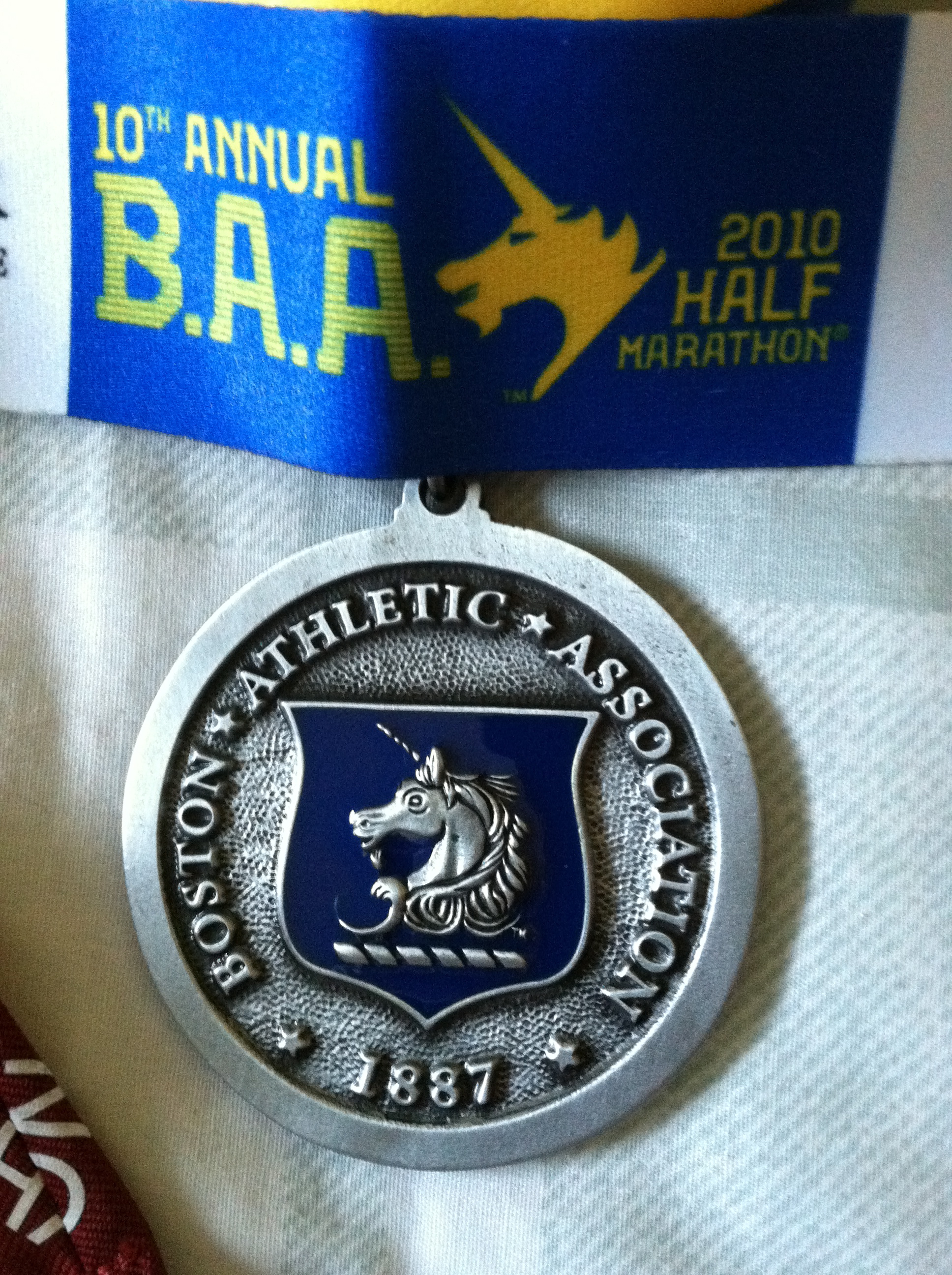
My best distance is the half marathon. I have qualified for and ran the Boston Half Marathon, which is how I earned my Boston Athletic Association medal. I don’t mind running half marathons. I do like to change up my race distances every now and again. The half marathon is not my favorite distance. The full marathon may be my most challenging, but is also my favorite.

As I have gotten older, and am approaching the Masters category in a few years, I still have a dream of Boston and getting my BQ. I am not going to kill myself for it. Yes, I can sit there and crunch the numbers and amp up my training, but what is more important to me at this point in my life than achieving my BQ is ensuring my health and safety to be able to run as long as possible throughout my life. Getting a BQ is not going to mean anything if I push it so hard that I sustain an injury that ends my running career. I have already overcome so much to be able to run marathons: a total of 10 broken bones, which includes breaking my spine in three places and spending time in a wheelchair, to 5 concussions, to a patella tear that almost did end my running career.

I am part of this magical community called runners in which we wave at each other as we pass on the trail, we help each other when we are struggling, and we line the streets to cheer for random strangers as they participate in their distance event and run pass. Yes, I am screaming for you, Random Citizen! You are not almost there, but you do look amazing, even if you are grimacing like a monkey humping a football because you are living your dream of running a marathon! That makes you look beautiful.

It doesn’t matter if you get a BQ or not. It does not matter if you come in first, middle or last. It doesn’t matter how many people have crossed that finish line before you, as long as you cross it. Many of us will never get our “15 minutes of fame.” But, you will get 1 second. That one second that your foot hits that finish line and clocks your time for completion, that one moment that you finish your marathon, whether it is your 1st, your 15th, or your 20th, that one moment YOU are the greatest athlete on the planet. That one-second is yours to own. You can say, “I did this.” “I ran a marathon.” Less than 1% of the world’s population can say that, folks.

Boston is every runner’s dream and it is always out there. For me, what is most important is not that I cross the finish line in Boston, but that I continue to keep crossing finish lines anywhere. We are all part of the same community. Boston is the oldest, most prestigious, and most beloved race. Even if you never achieve your BQ, that finish line belongs to all of us. It is the embodiment of all our hopes and dreams. If you never qualify for the bib, you can go spectate. You can still be part of the dream. Whether you are on the race course or part of the crowd, the magic that is Boston will course through your veins. A popular saying has been attributed to many, so it’s origin is uncertain states: “If you ever lose faith in humanity, go watch a marathon.” It’s true. Even if you never get your BQ, the magic of Boston can be experienced just by being there. Boston is every man’s dream.

As I approach medal # 14 this weekend, Boston is still my dream. Always was, always has been, and always will be. I chose one of the top ten fastest race courses in the country with a net elevation drop of 800 feet for my 14th race in an effort to qualify. Will I get my BQ? Probably not. But I will cross the finish line, and I will be able to train next year to cross a finish line somewhere else again. I will cross the start line. I will cross the finish line. I will run a good race.

Every April, whether we have achieved a BQ or not, the world watches with love and hope as people run the Boston Marathon. We are all running down a dream.

Ottawa 2008 – #TBT to medal # 2

IMG_6745 IMG_6746

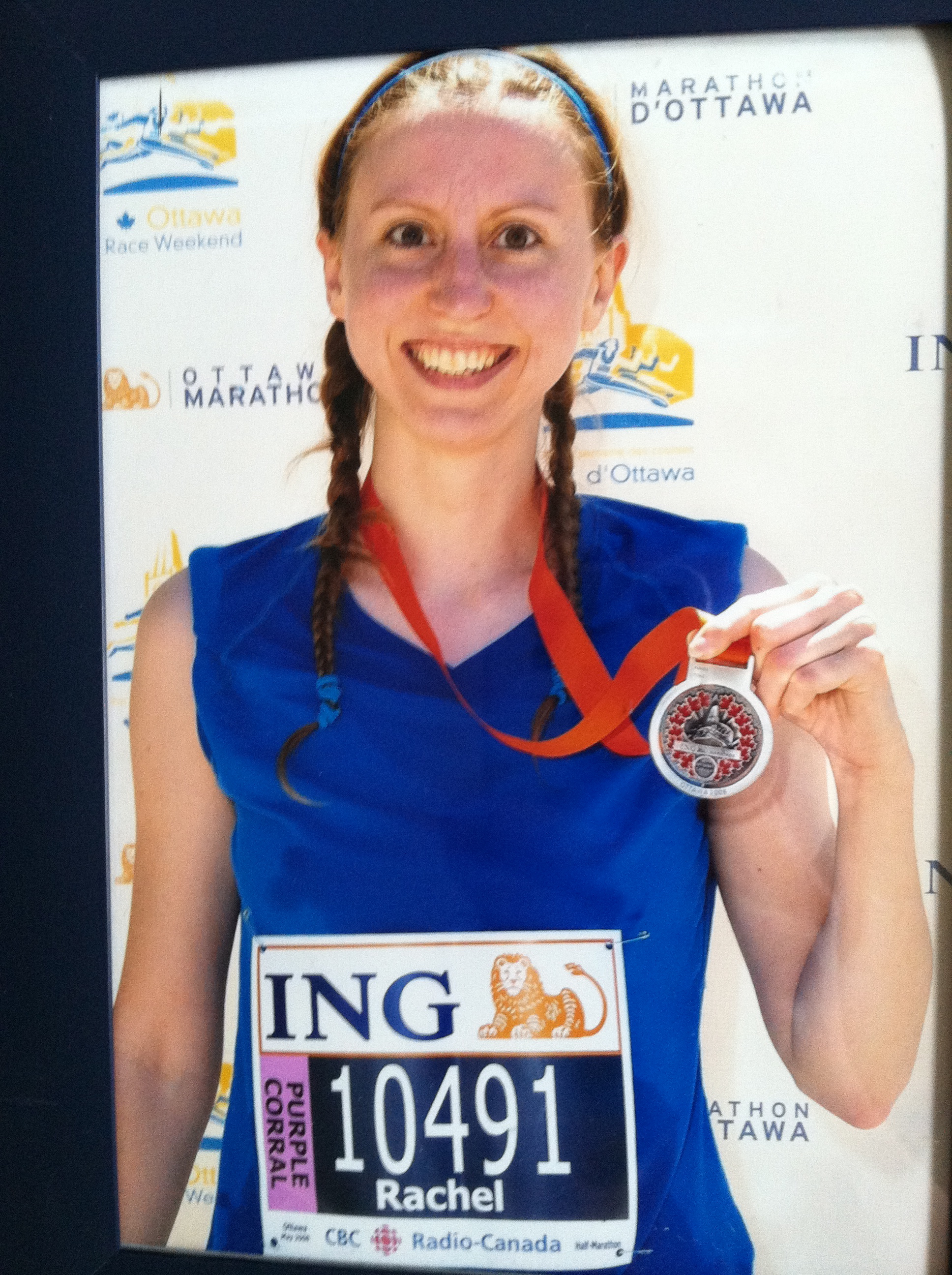
In early 2008, I broke both arms at the same time. I have had 10 broken bones total in my life. While this was not the most debilitating injury of my life (I have spent almost a year in a wheelchair), it was certainly an injury from which I learned the most.

My left arm was in a cast from my fingers to my elbow. There were three broken bones in my dominant arm. My right arm just had a broken elbow, and healed faster than the left. When the event first happened, I was in shock. I did not realize anything was broken. I actually got in my car and drove to work. As I was driving, I realized my left arm hurt. Then I realized my right arm hurt. When I got to work, it was fairly certain not only to me but to everyone around me, that they were both broken and I needed medical care. So came the casts.

I had plans to run Ottawa in May 2008. I was just coming off my first race in the fall of 2007. Ottawa would become my second medal.

The first few weeks after my injuries were the most challenging. The pain pills did absolutely nothing, so I stopped taking them. It was very challenging and uncomfortable to sleep at night with two broken arms, so I mostly slept during the day after spending nights crying alone to myself in pain. I could not feed or dress myself. I had to have someone help me every day. It took about 2 to 3 weeks before my fingers could wiggle enough on one hand for me to be able to pull off my own sock.

It was at this point in my life, that you quickly learn who is there for you – and who is not. I went without being bathed for quite awhile because I could not do it myself and no one would assist me. I did find someone to wash my hair in a sink, but had to pay for the service. I had to pay people to help prepare my meals, take me to orthopedic appointments, and clean my house. It was hard.

The doctors overseeing my care knew that I was scheduled to run in Ottawa in the spring. As it was winter, I usually start my planning inside on the treadmill and then move outdoors. Due to my injuries, I was forced indoors. The initial start of my training was delayed by about a month due to my injuries. I was still determined to train for and run the race.

I had numerous conversations with my medical team about training. They were concerned about me running – the bounce, and the pressure that would be put on my bones trying to heal. They regulated how fast I could go on the treadmill. One week they would say my speed could not go above 3.0. The next week they said I could not go above 3.5. It was a constant discussion, struggle, and compromise as I wanted to go faster, and they were concerned about rattling healing bones. The only thing I could think was, “at least it’s not my legs. It’s just my arms. I don’t need my arms to run.”

Running with casts on, even on the treadmill was a challenge in itself. I was weighted down. I was off-balance. Trying to stay on the treadmill without falling off and injuring myself worse or additionally was challenging enough.

I went through my entire training plan for my second race with two casts on.

My recovery really came down to the wire. My right elbow healed before my left arm, but I am left-handed. Towards the end, I could use my right hand, but it was awkward. You try using your weaker side for 3 weeks and see how you do.

Finally, my casts were sawed off and gone on a Tuesday. The race was 5 days later, that following Sunday. I still faced physical therapy for my arms, and was not fully recovered. When the cast came off my left arm particularly, I had a lot of atrophy. I still to this day have not regained full use of my dominant hand due to some nerve damage. I do not have all of my strength back. I have had to intentionally work very diligently to try to “even out” my left and right sides so that my strength is not lop-sided.

On a Sunday at the end of May 2008, I ran in Ottawa, and earned medal # 2. I ran with the Canadian National Army. I may have just has casts sawed off 5 days, prior, but by the second race, I had already caught the bug. I was a runner, and continuously trying to push myself, even coming off an injury.

The race itself was quite challenging. The weather conditions were reminiscent of Chicago 2007 – the year that lives in infamy as every runner’s nightmare when the temperatures hit unprecedented highs, runners died or were hospitalized, and the race was canceled in the middle of the race. The same thing happened that following spring in Ottawa. There were unprecedented and unplanned for highs that made the race that more difficult. The race organizers actually ran out of water and had to water us down with garden hoses not only the last few miles, but also in the runners only area after crossing the finish line. Luckily, the spectators were smart lifesavers. Many of the children had super soaker water guns they were spraying us with and some amazing spectators brought buckets of sponges in water. Running with sponges was a godsend in that race.

What I did not realize at the time I ran Ottawa or even immediately after, was that not only was I able to run Ottawa and obtain my second medal after a challenging injury, but I also ran a Boston qualifying time. Boston qualifying times are only good for two years. I had gotten an email saying that my time was only good for one more year, and that was the first I had heard or realized how well I ran.

I later went on to earn my Boston Athletic Association medal in 2010.

Ottawa taught me very early on in my running career that if you have your heart set on something, you could literally overcome almost anything to accomplish it. This is a lesson that has always stayed with me, and contributed to some other weird and off-the-wall feats in which I have engaged over the years since that race. Ottawa was the race that proved to me that marathon runners really are made in the training, not just one day when you race. It was the race that taught me that what happens in the middle is when you learn the most about yourself. It taught me that start lines are just as important as finish lines.

Your first race shows you that you are able to do the impossible. Only about 1% of the population will ever run a marathon. It is in subsequent races that you learn so much more – about who you are as a person, and what runners and spectators as a community are really all about.

Since overcoming two broken arms to run Ottawa, I have also overcome a knee injury that almost put an end to my running career, I have ran while fighting lymphoma, I have ran while dealing with multiple food allergies, I have ran through death, undergrad, grad school, falling in love, and happy tears. I have overcome so much through my running that Ottawa was really just the beginning.

Today, on Rewind Real Slow, we #TBT to medal # 2.

Whether it’s your first race or your 20th, each race and every runner has a story. Find yours.

The Insanity of Taper Mode

IMG_9734

The last three weeks of every marathoners training plan are not only challenging, but also crucial. Taper mode is that point at which your body is fully trained and prepared to go the distance of 26.2 miles long on race day, but your brain does not agree. To complicate this process, your training plan now says that you are supposed to decrease your mileage, rest, eat, and hydrate well in preparation for race day.

This seems to make total sense until you actually reach the point in the training plan where you enter Taper Mode and your brain screams: “Nooooooo. Noooooo. We’re not ready! We can’t do this! We must run more! I am not ready for the start line!”

To which your body responds: “Chill. We got this. We ready. We trained. Now is time to rest and gather our stores of glycogen and other nutrients to be able to perform.”

Yes, you are, in fact ready to race.

Your brain is not going to hear that. Your brain is not going to believe. Taper mode is called “the insanity of taper mode” because this is the point at which even the most psychologically robust completely loses their mind.

You develop OCD. You tell everyone you live in a bubble and to not touch you.

You’re like the llama in the Emperor’s New Groove telling everyone to not touch you.

The last few weeks before a marathon, you are also at your most vulnerable, immune wise. You sanitize everything like an air lock on a spaceship. Then you sanitize it again. You sanitize so much you should buy stock in soap and baby wipes.

Your training plan for Taper Mode says 6 miles. You cheat. You run 8 miles instead.

You panic. You pray. You make deals with both God and the Devil and anyone else who seems like they may be able to help you in any way. Your brain is on full-out psychotic freak out mode because it just realized you are about to run a MARATHON and that is 26.2 miles long. It’s way different from those Netflix marathons you’ve been doing to try to cope with Taper Mode.

All you need to do is make it to the start line healthy and strong. If you can make it to the start line, your body will do the rest. The start line is just as important as the finish line. In order to complete a marathon, you must cross both.

You start reading inspirational quotes, books, blogs, magazines, and watching inspirational movies to try to get yourself over the hump. You start imagining worst-case scenarios. You mentally prepare for this race better than some cult about to eat the pudding before the Hale Bopp comet. Run, walk, crawl, drag, or if in Philly, IN DRAG, you will cross the finish line. You imagine every single possible way and scenario to finish 26.2 miles because your brain does not think you are ready. You break it up into chunks: it’s a 5k with a 23 mile warm up, it’s a 10k with a 20 mile warm up, and any other chunk you can break down.

Meanwhile, your body is relaxed. Your body knows. Every fiber of every muscle in your body has been trained. The imprint of the 500+ miles you have run in the 5 months it took to prepare for the race are ingrained in your muscles. Your body knows what to do.

Your brain needs to get it together.

Calm down, man.

It doesn’t matter if it is your first time, your 20th, or your 50th, Taper Mode always feels this way. For me, I am going for medal # 14. Taper Mode is always the same. Your body is ready, and your brain is completely freaked out. You have followed the training plan, and the training plan has worked 13 times before. You will be fine.

But honestly, the insanity of taper mode makes the marathon that much more beautiful. When you lace up on race day, cross the start line, and get into the rhythm of the race, you will find that moment where your brain finally agrees with your body and calms down: “We got this.” That moment, when everything clicks into place, you just fly like you are on cruise control, and enjoy the moment for which you have spent a significant amount of your year preparing to do. That is the moment of marathon magic.

So while the insanity of taper mode is sure to be annoying and drive everyone crazy, in some ways it is necessary. Being able to appreciate how far you have come and everything you have OVERcome to get to this point is part of the marathon magic. The miracle is that you had the strength, the discipline, and the fortitude to train for those 5 months. This is for the Sunday morning long runs when you would have much rather stayed in bed and listened to the radio, this is for all the times when you ran in the pouring rain because you had to get the miles in, and a treadmill would have been worse punishment than anything mother nature can muster.

To run a marathon, you have to go a little crazy.

“But I’m not ready,” says brain.

“Yes, we are,” says body.

“We will start and we will finish,” says heart.

36

IMG_9643

36 life lessons from 36 years of camping, running marathons, teaching preschool, and living life.

  1. As we get older, the quality of our friendships is more important than the quantity of them.
  1. Always pee downhill. Not only should you pee downhill, but also not too close to a tree in case some woodland creature decides to exit their home and accidentally gets a shower at the moment you decide to squat.
  1. If a child gives you a rock or some other small treasure, smile, say thank you, and keep it. Children do not have money to buy things. They do not have jobs. The rock/leaf/whatever is probably the only thing they have to give you of value to show that they like you.
  1. No matter how cute they may look, squirrels and chipmunks can be aggressive. This also goes for kittens, puppies, children and other things in small packages.
  1. Always take rain gear, even if there is no rain in the forecast.
  1. No matter which direction the wind is blowing, it will always send campfire smoke in your face, so do yourself a favor and remove your contacts first.
  1. Sneakers melt when kicking logs that are on fire.
  1. Always take time to look at the stars. They remind you of your place in the universe.
  1. A great radio station can totally make your trip.
  1. You can start a good fire with just wood and matches in about 15 minutes. Add empty toilet paper rolls filled with dryer lint, and you can decrease that time to about 5 minutes.
  1. Obtain wood within 50 miles of your campsite to avoid destroying ecosystems by introducing new predators.
  1. Pack light. The bears aren’t going to care if you wear the same pair of shorts two days in a row and it’s less stuff to haul.
  1. Nap time, time outs, and coloring are all for adults.
  1. While the first and last miles of a marathon are very exciting, its what happens in the middle that makes or breaks your race.
  1. Everything you ever wanted to know about yourself, you can learn in 26.2 miles.
  1. Baby wipes solve a lot of problems – even if you don’t have a baby. Keep a pack in the car – you will be amazed at what you use them for.
  1. The best friends are the ones with whom you can go days without talking to them, and then when you do reconnect, able to pick up exactly where you left off.
  1. If someone fails to communicate with you, and then accuses you of making a bad decision, it is not your fault! You made the best choice you could on the information available, and if the other party properly communicated, you would have made a better choice. Don’t beat yourself up for doing the best with what you have.
  1. Do not live like you are dying. We are all dying every day. Live like it is the first day of your life. You will not be this old or this young again.
  1. Always take time for your grandparents and those older than you. You may have “all the time in the world,” but they do not. Let them know how you feel before they are gone and remember that the greatest gift you can give is your time.
  1. Always ask before touching someone. Always. This goes for children, animals, pregnant women, senior citizens, everyone.
  1. The best times in your life are the moments where you were too busy to take a photo, post a status update, or write something down about it.
  1. “Please” and “thank you” never go out of style. They are timeless. Use them.
  1. If you always tell the truth, you don’t have to remember or worry about lies.
  1. At the end of the day, what matters most is that you are able to sleep at night, content in that your words and actions for the day were your best effort.
  1. It is okay to say “no.”
  1. Take time for you. You cannot pour juice from an empty pitcher. Refill your cup, and when it overflows, you are able to give.
  1. Batting averages are based on best 3 of 4. You don’t have to be perfect to be great.
  1. You may spend 40 hours a week working, but what you do with the other hours of your life is up to you.
  1. It is okay to distance yourself from toxic people, relationships, and situations.
  1. It is okay to sit and do nothing every once in awhile. Really.
  1. Run like you are 6 years old again. Rediscover joy.
  1. If you adopt a pet, remember that this is a commitment for life. Your pet may live for 18-20 years. It is like having a child. Are you ready for that type of responsibility? Do not be flippant with this decision.
  1. If you decide to downsize or minimize, you will not miss or remember the things you get rid of. There is too much clutter in our houses and lives. Let it go.
  1. If you love someone, tell them. Tell them before it’s too late. Tell them because people are not mind readers and they may not know. Tell them. Even if it is not reciprocated, it is important for people to know that they are valued.
  1. Always be thankful for something. Every single day, no matter how small, find a piece of gratitude in every day. Life is too short to be miserable.

The first mile

IMG_4083

The first mile lies.

The last mile does too.

When you’re running a marathon, the first 26 miles is easy. It’s that last .2 that kills you.

This is about the first mile, in running, and in life.

The joke is that you don’t ever want to spectate in the first mile of a marathon. After spending an hour or more in the corral waiting for the shot gun start and the waves to cross the line, we all have to pee. Marathon runners in a sanctioned event generally go where we want to go without penalty or repercussion. The misconception is that we have to go in the first mile. In my experience of running 13 races, this is not true. We often spend the first mile jostling each other, trying to break away from the crowd, settle into pace, and avoid colliding with people slower than us without being run over by those who are faster.

The first mile is a hot mess, and the last thing on anyone’s mind is stopping to pee.

We just want to get the heck out of the pack.

The first mile of any life event is the same. When you start something new, you have to avoid going out too fast so that you do not lose steam, and you have to avoid standing still before the opportunity passes you by. Beginnings are hard. Running marathons has taught me to not only embrace finish lines and the accomplishment they bring, but to also appreciate the opportunities that start lines and new beginnings bring.

One of the hard parts of the first mile is finding your pace or settling into your rhythm. Depending on how large the race, I like the really big ones with 20,000+ runners; sometimes it takes to mile 5 or 6 before you actually settle into your pace. I call it cruising altitude. Kind of like an airplane, it is the point in the race in which I just go, my body doing what I have spent the past 5 months training it to do, and my mind just enjoying the euphoria that is the feeling of the race and riding on the energy of the cheering crowds.

It takes guts to put your self out there like that. 26.2 miles – what could possibly go wrong? You put 5 months of your life into training for one day. One day that you don’t even know what the weather conditions will be like for an outdoor event, if you will be sick or well, or any other technicality or detail, other than you have signed up to toe the line to run 26.2 miles that day. It’s been circled on the calendar, sometimes for a year in advance, depending on the race for which you registered, and so many hopes and dreams hinge upon that date.

Did you adequately train? Did you adequately hydrate? Are you really ready to toe the line? All the doubts and insecurities that you have well up inside you as you spend that hour or more in the corral waiting for the start.

The first mile lies.

The first mile says: why am I here? What did I get myself into? What if I fall? What if I do not finish? What if I fail?

That moment when you hit cruise control is when faith kicks in. That is the moment when you realize you have trained, you are ready, and you are now entering cruising altitude in giddy anticipation of the finish line.

But what about that first mile? How do you get through that?

It’s scary. Trying anything new is scary. Whether it is a new job, a new relationship, letting your walls down and allowing yourself to be vulnerable with someone, anything new is scary. The first mile lies.

I don’t know what to tell you other than that. The person who starts a marathon is not the same person who finishes a marathon. Everything you ever wanted to know about yourself, you will learn in 26.2 miles. The first mile lies. While it may not seem possible the moment you are in that first mile, once you are past it, you will know that you can get through it and will have this feeling of invincibility that will never leave you.

Beginnings are hard. I’m not sure how to make them easier, but I know that it is possible to get through them. Most times, the best things in life are just on the other side of fear.

I would rather be a “did not finish” than a “did not start.” Even a “last place finish” is better than a “did not start.”

There are times in my life when I am facing new beginnings that have absolutely nothing to do with running. I try something new, I feel needy, clingy, insecure. That’s the equivalent of the first mile. Yet, somehow, those negative feelings always pass and things work out all right. If running has taught me anything, it’s to keep going because the best sight may be just around the next corner.

As I slow down in life and try new things, I have to learn to be comfortable with those challenging feelings that sometimes come with new experiences. It is hard to sit there with those feelings. Insecurity and doubt are not pretty. I know that it is all about finding the balance between going out too fast and standing still. I can tell you right now, that I am not the type of person to stand still.

While the first mile may be challenging, it is definitely worth it. Once you get over the initial hurdle and settle into your race pace, everything works out fine. You are able to enjoy the race, the crowd, and the experience for which you have given a significant portion of your year and life to have.

The first mile may lie, but once you get past the fear, you have one of the best experiences in your life.

What new things have you jumped into lately?